
How to Prevent Child Labor: Practical Solutions for Families and Communities
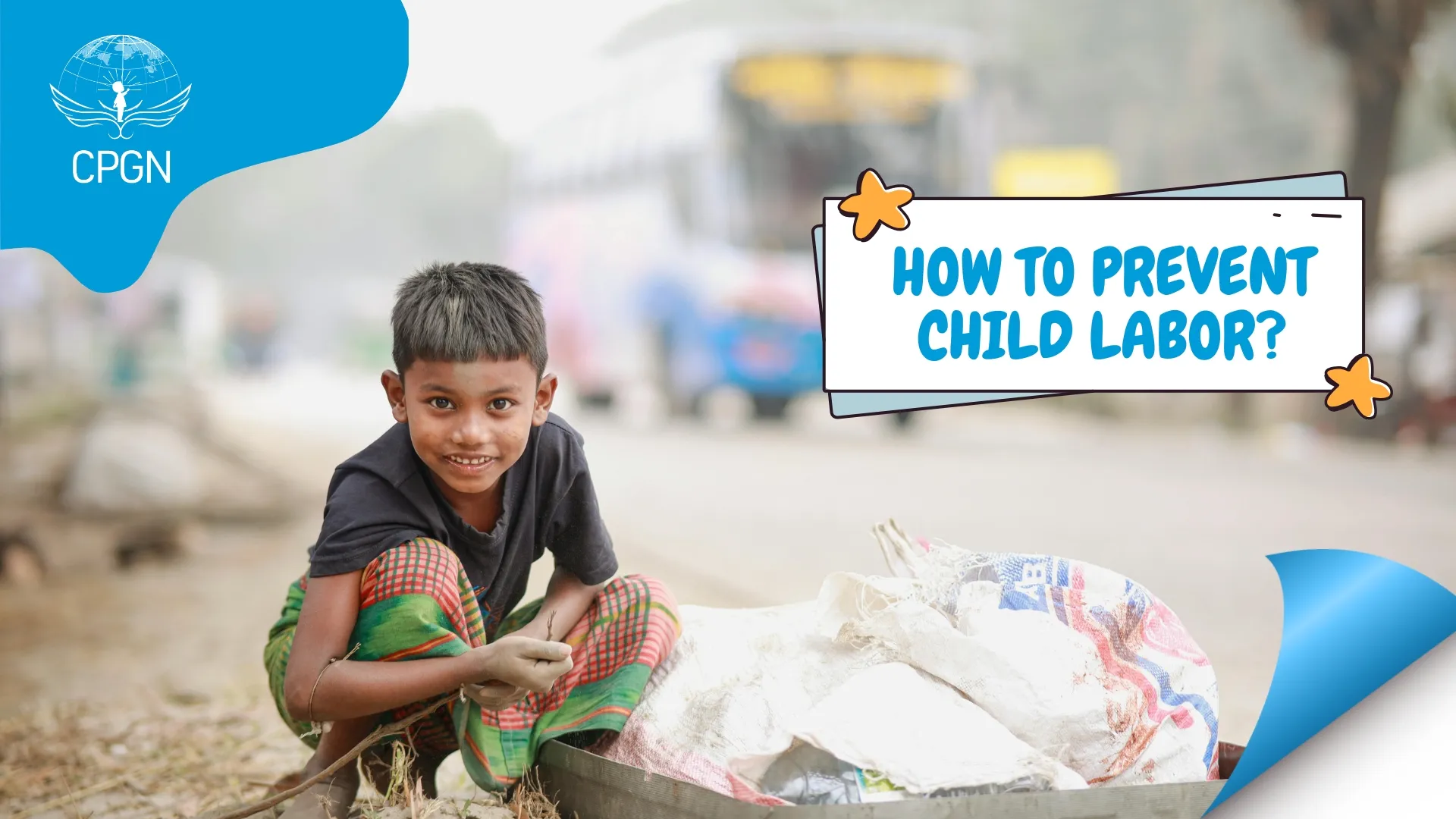
Child labor remains a global issue, with millions of children still at risk.
- Mark S.
- Last updated 5 May 2026
The best way to prevent child labor is to keep children in safe, quality education while supporting families with income, food, healthcare, social protection, and strong child protection systems. Child labor prevention works best when families are not blamed, but helped before poverty, crisis, or exploitation forces children into harmful work.
According to the latest UNICEF/ILO global estimates, nearly 138 million children remain in child labor worldwide, including many children engaged in hazardous work that can harm their health, safety, education, and development.
In this article, you’ll learn:
- What child labor really means
- Why children are pushed into work
- How child labor affects a child’s future
- Practical ways to prevent child labor
- How families, communities, schools, and organizations can help
What Is Child Labor?
Not every task a child does is child labor. A child helping with light chores at home, learning responsibility, or supporting family routines in safe and age-appropriate ways is different.
Child labor is work that harms a child or interferes with their development. This includes work that:
- Keeps a child out of school
- Exposes them to danger, abuse, or exploitation
- Damages their physical or emotional health
- Forces them to work long hours
- Places adult responsibilities on young shoulders
Why Does Child Labor Still Happen?
Child labor is often misunderstood. Many people assume it happens because families do not care about education, but the reality is usually much more painful.
Most parents want their children to be safe and have better lives. But when a family is struggling to afford food, rent, school fees, or medical care, a child may be pushed into work because the household has no safety net.
The most common causes include:
- Poverty and family debt
When survival becomes the priority, children may be asked to contribute financially. Research from UNICEF and the ILO shows that child labor is closely tied to poverty, vulnerability, and lack of social protection. - Lack of access to quality education
If school is too far, too costly, unsafe, or low quality, children are more likely to drop out. - Weak child protection systems
Without strong reporting and enforcement, exploitation can continue unnoticed. - Cultural or social pressure
In some communities, child labor is seen as normal, even when it harms children. - Conflict, migration, or crisis
Families affected by displacement or disaster are often at higher risk of relying on child labor.
Imagine a 10-year-old child who misses school every morning to work in a shop because the family cannot cover basic expenses. At first, it may look like “helping out.” But over time, that child falls behind in school, becomes exhausted, and loses opportunities that could change their future.
That is how child labor quietly traps children and families in the same cycle of poverty.
Why Preventing Child Labor Matters
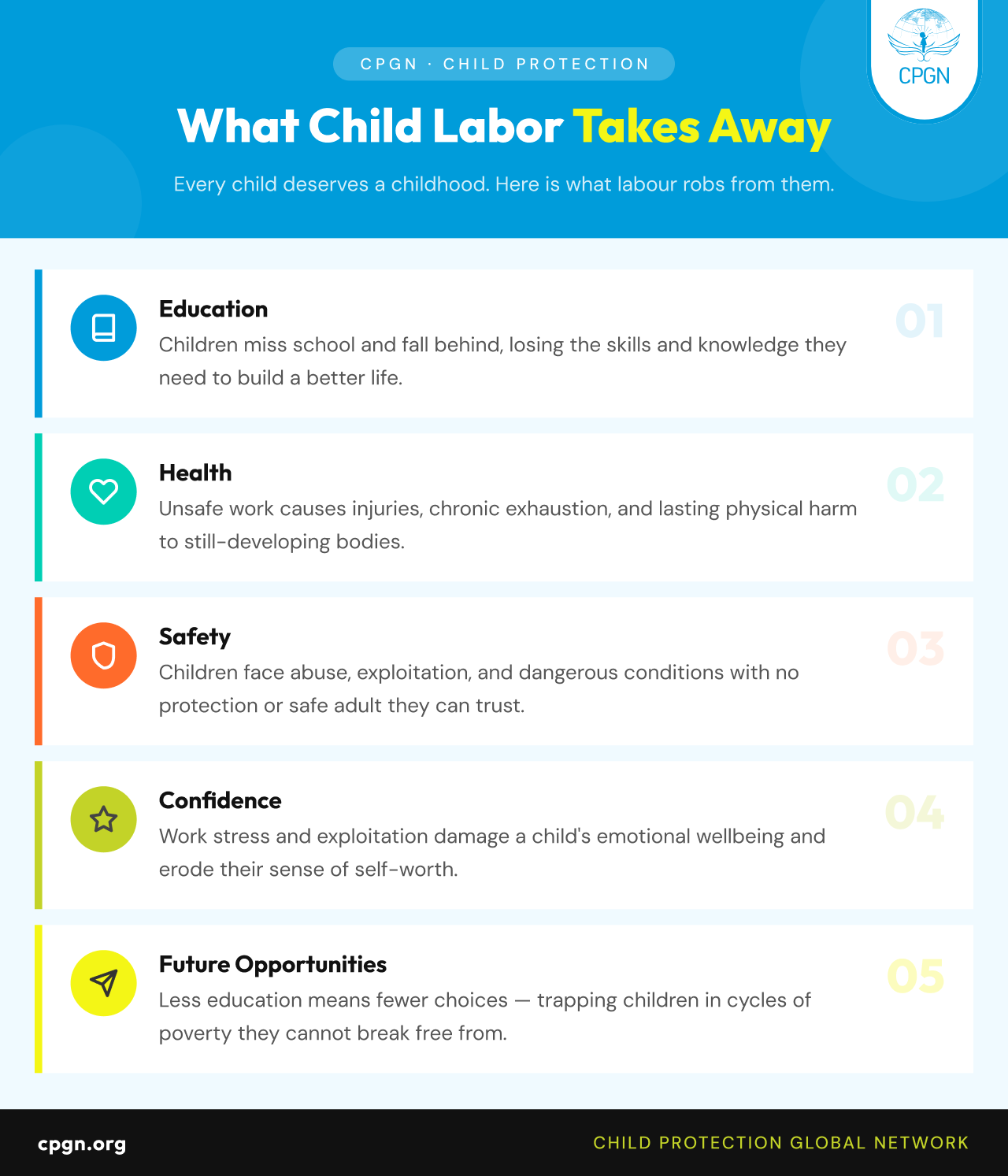
How to Prevent Child Labor
Preventing child labor requires more than simply removing a child from work. We must also ask, “Why was this child working in the first place?”
The strongest solutions protect both the child and the family.
1. Keep Children in Safe, Quality Education
Education is one of the most powerful tools against child labor.
When children stay in school, they gain knowledge, confidence, structure, and future opportunities. Schools also give children contact with trusted adults who may notice when something is wrong.
But education must be realistic for families. That means:
- Schools should be affordable and accessible
- Children should feel safe in classrooms
- Families may need support with supplies or transportation
- Teachers should be trained to identify children at risk
A child is less likely to enter harmful work when school feels possible, safe, and worthwhile.
2. Support Families Before They Reach Crisis
Many families do not choose child labor freely. They turn to it because they feel trapped.
Prevention works best when families receive support before the situation becomes desperate. This may include:
- Food assistance
- Job opportunities for parents
- Skills training
- Healthcare access
- Emergency financial support
- Community-based family services
ILO and UNICEF research on social protection shows that reducing family poverty and vulnerability can lower key drivers of child labor. When parents have stable income and support, children are less likely to carry adult burdens.
3. Strengthen Laws and Reporting Systems
Laws against child labor are important, but laws must be enforced. Children are protected when governments, schools, social workers, and communities know how to respond.
Strong prevention systems include:
- Clear child labor laws
- Safe reporting channels
- Trained protection workers
- Regular monitoring of high-risk sectors
- Support for children removed from harmful labor
People also need to know where to turn. Families and individuals can use CPGN’s help and resources page to find guidance and support related to child protection concerns.
4. Raise Awareness Without Blaming Families
Awareness matters, but it must be done with compassion.
Blaming poor families does not solve child labor. In fact, it can create shame and silence. A better approach is to help communities understand the difference between safe responsibility and harmful exploitation.
For example, a child helping set the dinner table after school is very different from a child working long hours and missing class. A teenager learning a safe skill under proper guidance is very different from a young child doing dangerous labor.
When communities understand these differences, they are more likely to protect children instead of normalizing harm.
5. Encourage Responsible Businesses
Businesses can either help prevent child labor or allow it to continue unnoticed.
Responsible businesses should:
- Check their supply chains
- Pay fair wages to adult workers
- Avoid suppliers that exploit children
- Create safe working standards
- Report suspected child labor
Consumers can also make thoughtful choices by supporting ethical brands and asking where products come from. Child labor often survives in hidden supply chains, so transparency matters.
6. Create Safer Communities for Children
Children are safer when communities pay attention.
A teacher who notices a child is always tired. A neighbor who sees a child working late every night. A local leader who questions why children are dropping out of school. These small observations can become the first step toward protection.
Preventing child labor is not only about policies. It is also about people caring enough to act.
Did You Know?
Global progress proves that prevention works. The joint 2024 Global Estimates of Child Labour show that there are now over 100 million fewer children in child labor than in 2000. This progress happened because of stronger education efforts, family support, public awareness, and better protection systems.
Still, millions of children remain at risk, especially in informal and hidden work settings such as farms, homes, workshops, and street-based jobs. That is why prevention must happen early, consistently, and at every level.
What Can You Do to Help Prevent Child Labor?
You do not need to be an expert to make a difference. You can start with simple, meaningful actions:
- Support education
Encourage school attendance and help identify children who may be dropping out. - Speak up safely
Report suspected exploitation to appropriate authorities or child protection services. - Support struggling families
Offer help through trusted community programs, charities, or local support networks. - Choose ethical products when possible
Support businesses that value fair labor and transparency. - Share awareness
Talk about child labor in a way that is compassionate, informed, and focused on solutions.
Sometimes protecting a child begins with one person noticing, caring, and refusing to look away.

Protecting Childhood Is a Responsibility We Share
Preventing child labor is not only about stopping children from working. It is about protecting their right to be safe, educated, healthy, and hopeful.
Every child deserves the chance to learn, play, rest, and grow without carrying adult burdens too soon. When families are supported, schools are accessible, communities are aware, and protection systems are strong, children have a better chance to build the future they deserve.
At Child Protection Global Network, this mission is central to our work. With 20 years of experience advocating for children’s rights and welfare, CPGN works to raise awareness, support families, strengthen child protection systems, and protect children from exploitation, abuse, neglect, and harmful practices like child labor. If a child or family needs guidance, CPGN’s help and resources can offer a starting point for support.
Together, we can help create a world where childhood is protected, not sacrificed.
Protect a Child Today
As a registered 501(c)(3) nonprofit, we focus on preventing abuse and protecting children at risk. Your donation helps create a safer future.
FAQs
The best way to prevent child labor is to combine education, family support, strong laws, community awareness, and safe reporting systems. Children are safest when families have resources and communities know how to respond.
Education keeps children in safe learning environments and gives them skills for the future. When children stay in school, they are less likely to enter harmful work and more likely to break the cycle of poverty.
The main causes include poverty, lack of education, family debt, weak protection systems, conflict, migration, and social norms that make harmful child work seem acceptable.
Mark S.
Mark S. is a dedicated child protection advocate and co-founder of Child Protection Global Network (CPGN). With a background in community development and public education, he supports CPGN’s mission to protect children from abuse and neglect through awareness, prevention education, and community guidance.
Through his work with CPGN, Mark helps families, educators, and communities better understand child safety, recognize warning signs, and take informed steps when a child may be at risk. His writing focuses on making child protection information clear, practical, and accessible for people who want to create safer environments for children.
Mark believes that protecting children begins with awareness, early action, and stronger community responsibility. His work reflects CPGN’s commitment to helping every child feel safe, heard, and protected.
All Posts

CPGN is a 501(c)(3) nonprofit organization dedicated to protecting children and strengthening families.
Tax-exempt since August 29, 2024.
See a child in danger? If you are in immediate danger, call local emergency services. For guidance from CPGN, Get Help.
CPGN is a 501(c)(3) — donations are tax-deductible where applicable. Our goal is to ensure the safety and protection of every child until it is achieved.
Copyright © 2026 CPGN. All rights reserved by Majnate LLP | Privacy Policy | Terms and Conditions