
Is Corporal Punishment Abuse: The Truth According to Child Protection Experts
Corporal punishment is increasingly recognized by child protection experts as a harmful practice that causes physical and emotional harm, making it a form of child abuse rather than discipline.

You love your child. You want them to grow up respectful, responsible, and safe. But there are moments when parenting feels overwhelming. A child refuses to listen, pushes boundaries, or repeats the same mistake again and again. In those moments, some parents turn to physical discipline, believing it will correct behavior quickly.
For many families, corporal punishment has been seen as a normal part of raising children. It may feel like a way to “teach a lesson” or maintain control. But today, more parents and caregivers are asking a deeper question:
Is corporal punishment actually discipline, or could it be considered abuse?
This is not about blaming parents. It is about understanding what children experience, what research shows, and what truly helps children grow in a safe and healthy way.
Did You Know?
- Nearly 2 in 3 children worldwide experience violent discipline, including physical punishment
- Experts agree that corporal punishment has no positive long-term benefits
- Many countries are moving toward banning physical punishment completely
Organizations like UNICEF and the World Health Organization recognize corporal punishment as a form of violence that can harm children’s development.
Quick Summary: What You’ll Learn
- What corporal punishment really means
- Whether it is considered abuse
- What research says about its impact
- Why parents still use it
- Safer and more effective ways to discipline children
What Is Corporal Punishment?
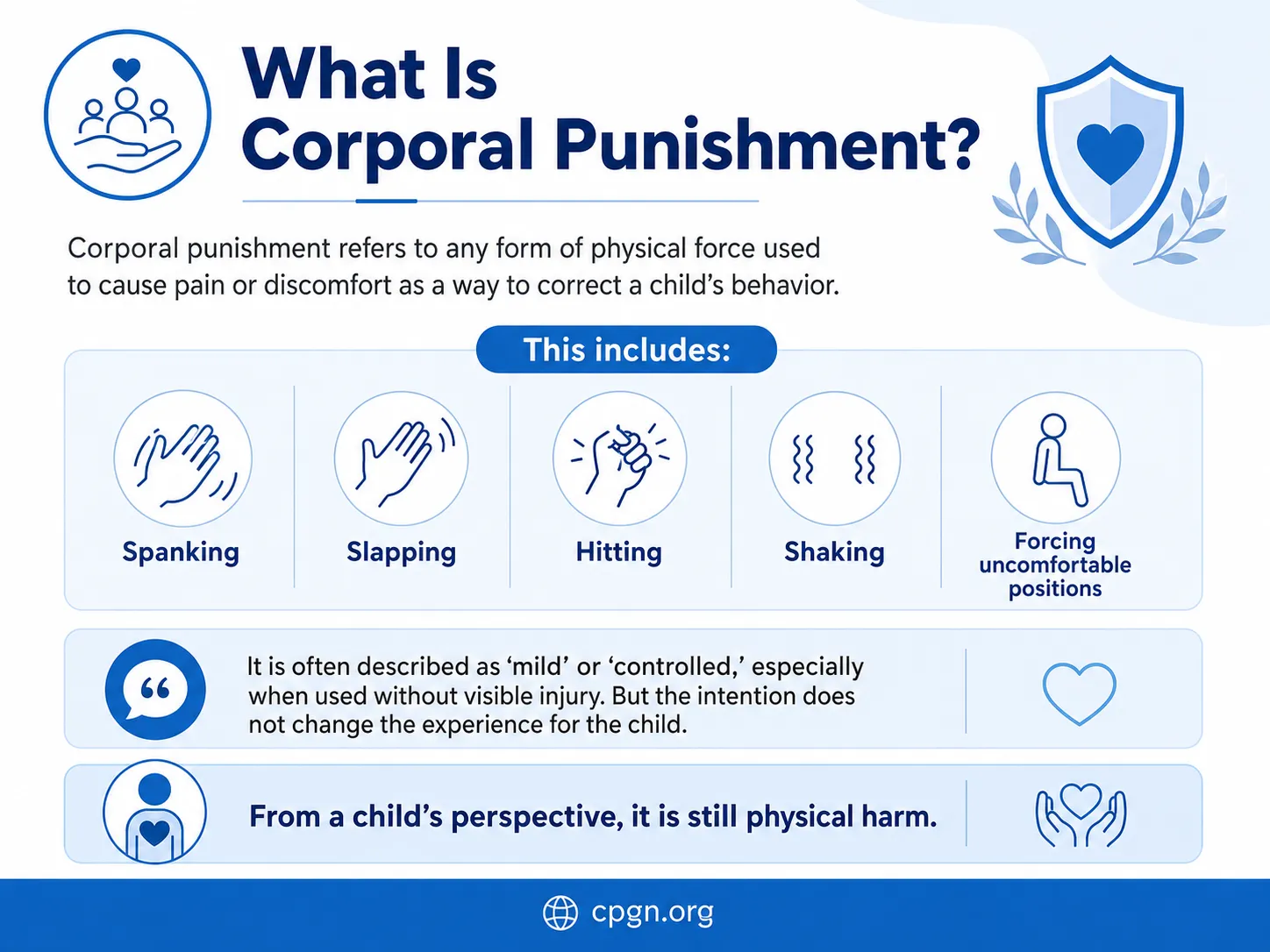
Corporal punishment refers to any form of physical force used to cause pain or discomfort as a way to correct a child’s behavior.
This includes:
- Spanking
- Slapping
- Hitting
- Shaking
- Forcing uncomfortable positions
It is often described as “mild” or “controlled,” especially when used without visible injury. But the intention does not change the experience for the child.
From a child’s perspective, it is still physical harm.
Is Corporal Punishment Abuse?
Yes. Child protection experts, including the U.S. Centers for Disease Control and Prevention (CDC), define corporal punishment as a form of child abuse.
Repeated or severe acts of corporal punishment often escalate and result in emotional and physical trauma — especially in environments lacking oversight, such as the home or informal schooling systems.
Corporal Punishment in Schools: A Dangerous Practice
This question does not have a simple yes or no answer, but understanding the full picture is important.
The balanced answer:
Corporal punishment is not always legally classified as abuse, but research strongly shows it can harm children and may lead to abusive patterns.
In some countries, physical discipline is still legally allowed if it does not cause injury. However, the global view is changing.
The World Health Organization states that all forms of corporal punishment carry a risk of harm and escalation. This means that what begins as “discipline” can sometimes become more severe over time, especially during moments of stress or
From a child protection perspective, corporal punishment exists on a continuum of violence, rather than being completely separate from abuse.
What Research Tells Us About Its Impact
Scientific studies over many years have reached a clear conclusion.
Children who experience corporal punishment are more likely to:
- Show aggressive behavior
- Experience anxiety or emotional distress
- Struggle with trust and attachment
- Develop behavioral problems
A major review supported by the United Nations found that the effects of corporal punishment are similar to those of more severe physical abuse.
One important truth stands out:
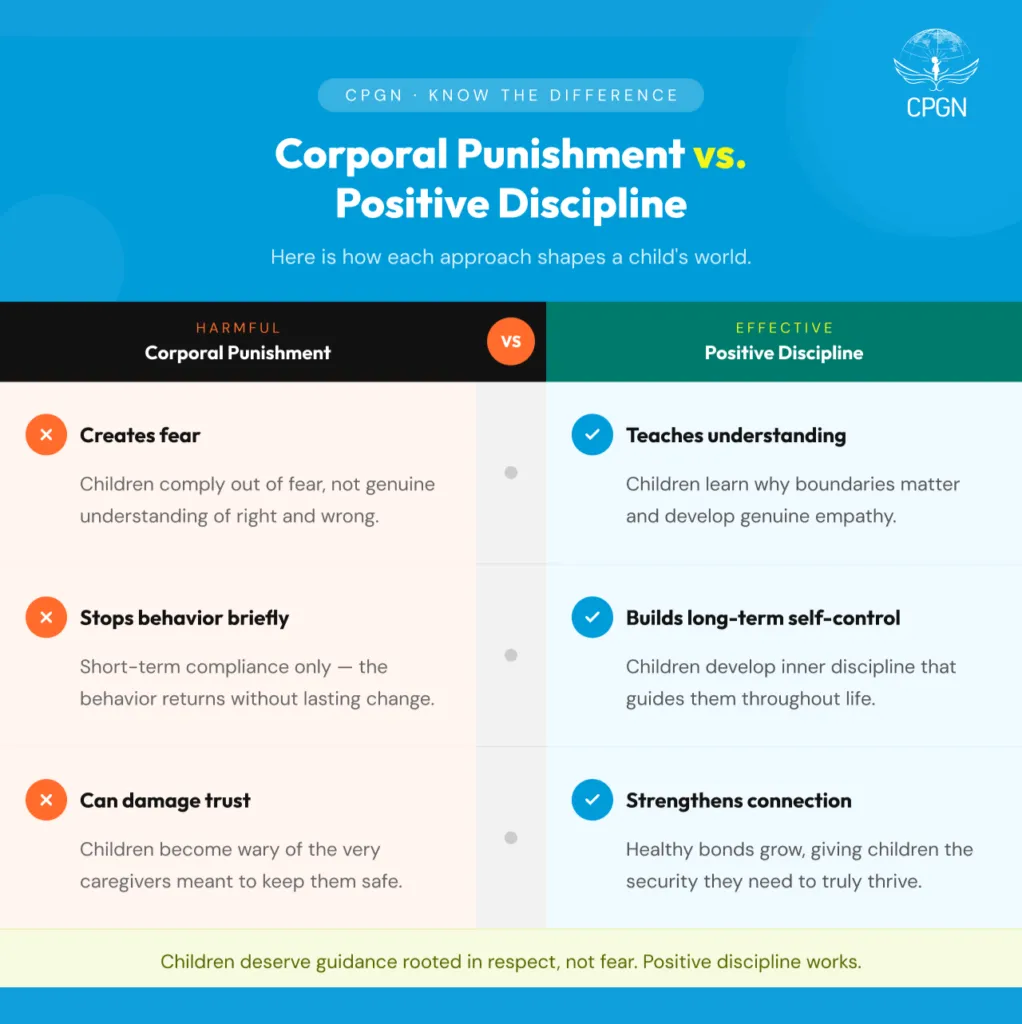
Corporal punishment may stop behavior in the moment, but it does not teach understanding.
Instead, it often teaches fear.

A Story Many Families Can Relate To
Imagine a parent who has had a long, stressful day. Their child refuses to listen, throws a tantrum, or breaks a rule. After repeatd warnings, the parent reacts with a quick slap.
The child becomes quiet.
From the outside, it may seem like the lesson worked. But inside, something else is happening.
The child is not calm because they understand. They are calm because they are afraid. Over time, that fear can turn into distance, confusion, or even anger.
This is the hidden side of corporal punishment. It changes how children feel, not just how they behave.
Why Do Parents Still Use It?
It is important to approach this topic with empathy.
Most parents who use corporal punishment are not trying to hurt their children. In many cases, they are:
- Following how they were raised
- Feeling overwhelmed or unsupported
- Looking for immediate results
- Unsure of other discipline methods
Cultural beliefs also play a role. In some communities, physical punishment is still seen as necessary or effective.
Understanding these reasons helps shift the conversation from judgment to support.
The Hidden Emotional Impact on Children
Children do not always express their feelings clearly, but they feel deeply.
Corporal punishment can:
- Reduce a child’s sense of safety
- Create fear instead of respect
- Affect emotional development
- Increase anger or withdrawal
It can also overlap with other forms of harm. When physical punishment becomes frequent or intense, it may move into patterns of physical abuse. Learning about topics like physical child abuse can help parents recognize where discipline may cross the line.
At its core, discipline should guide children, not hurt them.
What Works Better Than Corporal Punishment?
The good news is that there are safer, more effective ways to guide children’s behavior.
- Set Clear and Consistent Rules
Children respond better when they understand expectations in advance.
Explain:
- What behavior is expected
- What consequences will follow
Consistency builds trust.
- Use Calm and Logical Consequences
Consequences should help children learn.
For example:
- Losing privileges
- Taking a break to calm down
- Fixing a mistake they made
These teach responsibility without fear.
- Stay Calm During Difficult Moments
Children learn from how adults respond.
When a parent remains calm, it shows children how to manage emotions in healthy ways.
- Listen to the Child’s Perspective
Behavior often has a reason.
A child may act out because they are:
- Tired
- Frustrated
- Seeking attention
- Struggling emotionally
Understanding the cause helps address the behavior more effectively.
- Encourage Positive Behavior
Children respond strongly to encouragement.
When you notice and praise good behavior, children are more likely to repeat it.
- Build Trust and Safety
Children behave better when they feel secure and understood.
Discipline should strengthen the parent-child relationship, not weaken it.
If you ever feel unsure about how to respond or need guidance, CPGN provides support through its help and resources page.
Choosing Care Over Control
Parenting is one of the most challenging roles in life. There is no perfect way to do it, and every parent faces moments of stress and uncertainty. What matters most is being willing to learn, reflect, and choose what truly supports a child’s wellbeing.
Corporal punishment may seem like a quick solution, but it often comes with long-term emotional and developmental consequences. Children do not just need discipline. They need guidance, patience, and a safe environment where they can grow and learn from mistakes.
At Child Protection Global Network, protecting children means helping families understand what supports healthy development and emotional safety. If you believe every child deserves to grow up feeling safe, respected, and understood, you can be part of this mission. Your support through the Donate Now initiative helps provide education, resources, and protection for children around the world.
Together, we can create a future where discipline is built on understanding, not fear.
Protect a Child Today
Every child deserves to feel safe and protected. Your support helps us respond when it matters most.
FAQS
While some cultures still accept it, research shows that corporal punishment can harm children and is not recommended by global child protection experts.
It may stop behavior temporarily, but it does not teach long-term understanding. It often leads to fear rather than learning.
Positive discipline methods such as clear rules, calm consequences, communication, and emotional support are more effective and safer.
Mark S.
Mark S. is a dedicated child protection advocate and co-founder of Child Protection Global Network (CPGN). With a background in community development and public education, he supports CPGN’s mission to protect children from abuse and neglect through awareness, prevention education, and community guidance.
Through his work with CPGN, Mark helps families, educators, and communities better understand child safety, recognize warning signs, and take informed steps when a child may be at risk. His writing focuses on making child protection information clear, practical, and accessible for people who want to create safer environments for children.
Mark believes that protecting children begins with awareness, early action, and stronger community responsibility. His work reflects CPGN’s commitment to helping every child feel safe, heard, and protected.
All Posts

CPGN is a 501(c)(3) nonprofit organization dedicated to protecting children and strengthening families.
Tax-exempt since August 29, 2024.
CPGN is a 501(c)(3) nonprofit organization dedicated to protecting children and strengthening families.
Tax-exempt since August 29, 2024.
See a child in danger? If you are in immediate danger, call local emergency services. For guidance from CPGN, Get Help.
CPGN is a 501(c)(3) — donations are tax-deductible where applicable. Our goal is to ensure the safety and protection of every child until it is achieved.
Copyright © 2026 CPGN. All rights reserved by Majnate LLP | Privacy Policy | Terms and Conditions