The Psychological Toll of Parental Alienation on Children
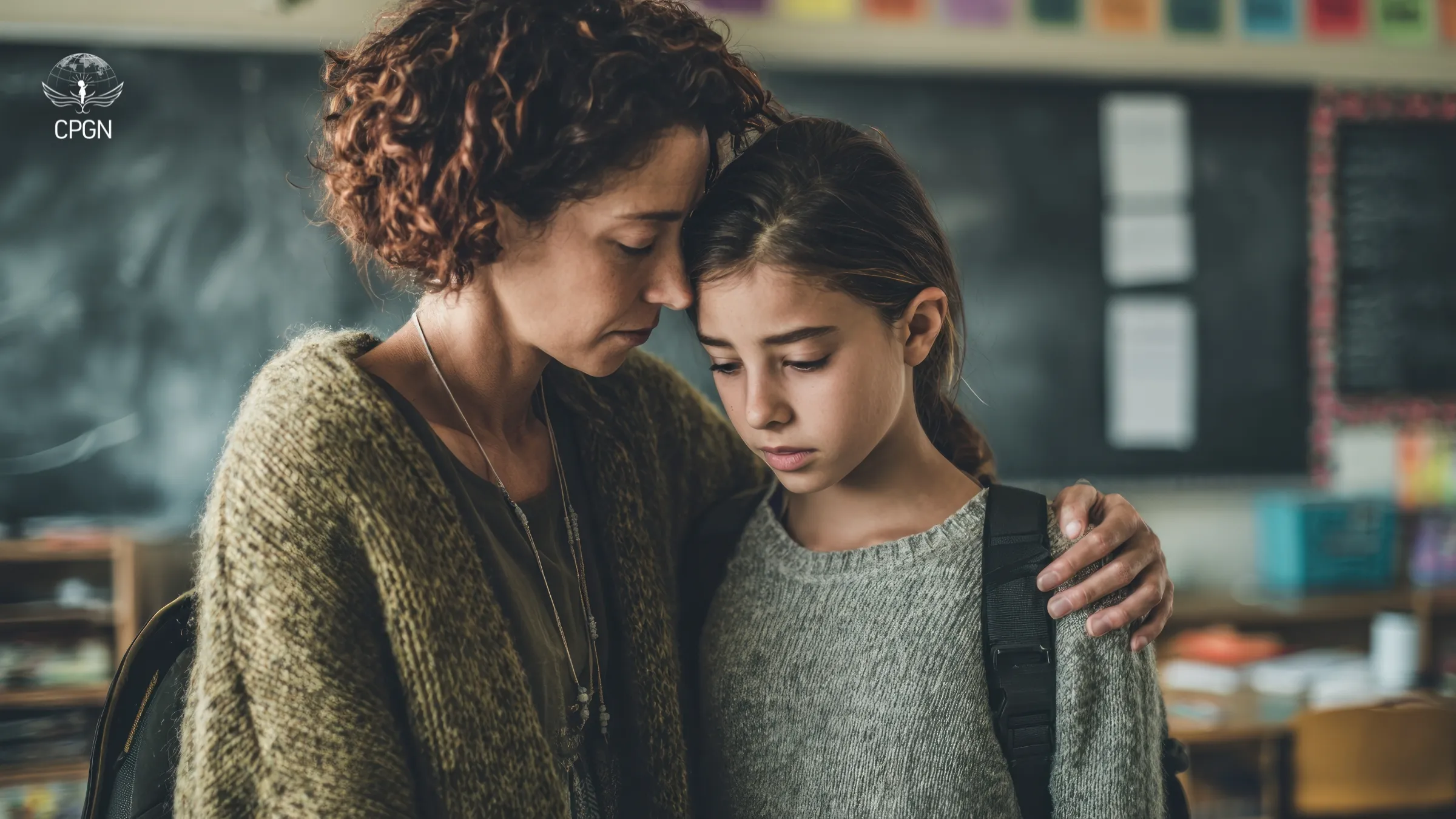
Most wounds can be seen, treated, and healed over time. But some wounds are invisible, buried deep inside a child’s heart, shaping how they see themselves and the world around them.
Parental alienation is one of those wounds. It doesn’t leave bruises or scars that you can photograph, yet its impact can be just as damaging as physical abuse. When one parent manipulates a child into rejecting the other, the child is forced to carry a heavy emotional burden: guilt, confusion, and the painful belief that love must be conditional.
This is the painful reality of parental alienation, and while the scars it leaves are often invisible, their impact on a child’s life can be profound and lifelong.
At CPGN, we believe it’s time to treat these wounds with the same urgency as any other form of child abuse.
Understanding the Emotional Harm
Parental alienation occurs when one parent manipulates a child into rejecting or distancing themselves from the other parent. Sometimes this is done intentionally—through badmouthing, false accusations, or constant undermining. Other times, it may happen subtly, with one parent fostering guilt or pressure to “choose sides.”
What makes this abuse so devastating is that it hijacks a child’s natural bond with a parent. As psychologist Dr. Amy Baker explains,
“Alienation warps a child’s perception of reality. They come to distrust their own memories, their own feelings, and this erosion of trust in themselves is the deepest wound of all.”
Unlike physical abuse, the damage isn’t immediately visible. But beneath the surface, alienated children often carry heavy emotional burdens, self-doubt, anxiety, fear of abandonment that can shape their entire lives.
See Article: Emotional Child Abuse
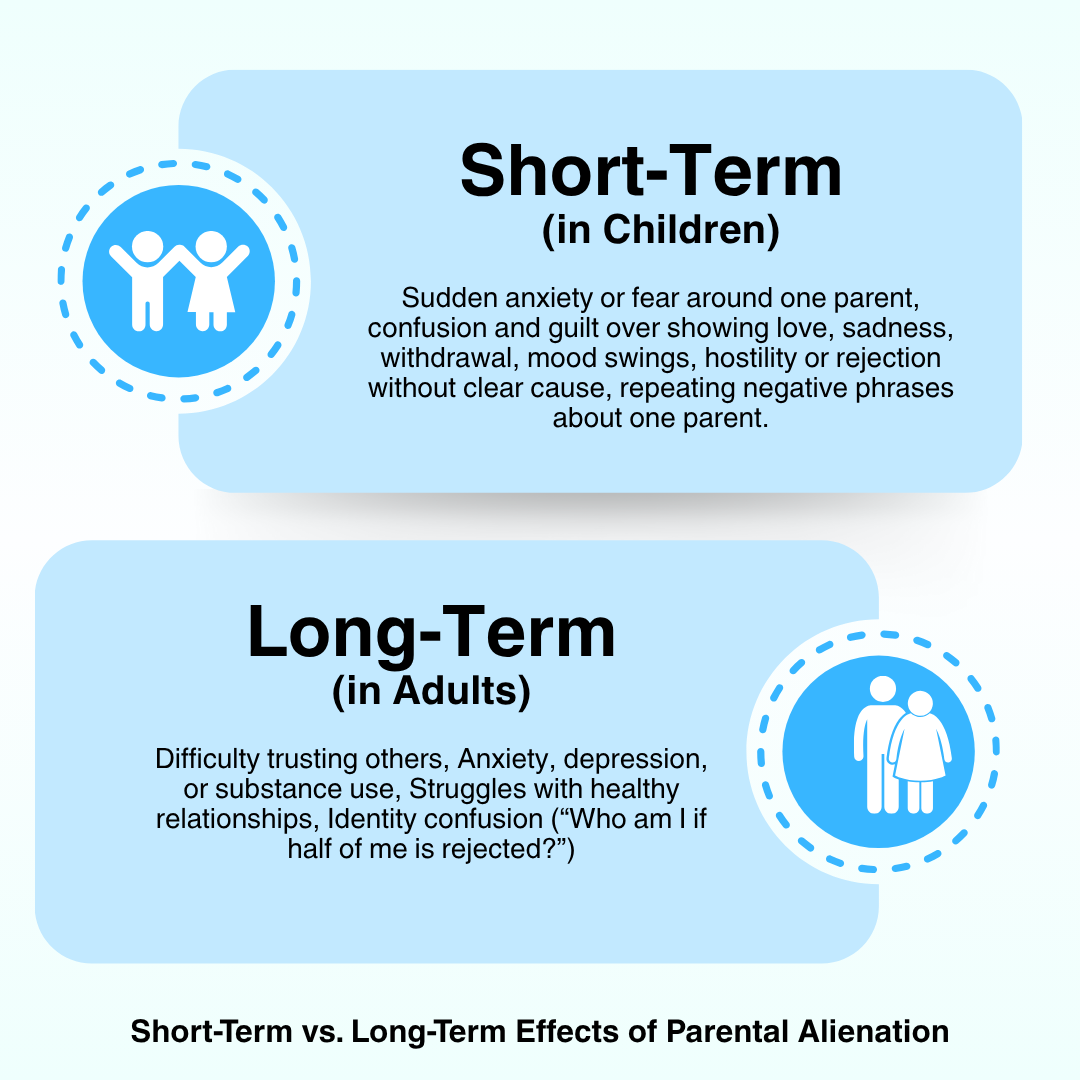
Short-Term Effects: The Immediate Strain
In the early stages, children exposed to parental alienation often display noticeable changes in mood and behavior.
- Anxiety and fear: A child who once ran into your arms might suddenly appear nervous or even frightened. Often, this fear doesn’t match reality but mirrors what they’ve been told.
- Depression and sadness: Feeling forced to reject a parent can trigger deep loneliness, hopelessness, and sadness in children, even if they can’t fully express why.
- Confusion and guilt: Children may feel torn between loyalty to one parent and love for the other. One teenager quoted in a UK parental alienation study shared, “I felt like I was betraying my mom every time I smiled with my dad.”
Clinical experts say these short-term effects can manifest quickly. Gary Tucker, a licensed psychotherapist, notes that “children internalize blame when caught in parental conflict. They often feel it’s their responsibility to fix things, which fuels anxiety and guilt.”
For many, these early struggles are only the beginning. Without intervention, the invisible wounds deepen.
Long-Term Impact: Scars That Don’t Fade
The long-term consequences of parental alienation extend far beyond childhood. Researchers and therapists consistently warn that these wounds can echo into adulthood, shaping the way alienated children view themselves and their relationships.
- Trust Issues
Alienated children grow up doubting not just their parents, but their own judgment. When a trusted parent convinces them to reject the other, they learn that love can be conditional and fragile. This often translates into struggles with trust in friendships, romantic relationships, and even professional settings. - Attachment Disorders
Early attachment is the foundation of emotional health. When that bond is severed, children may develop avoidant or anxious attachment styles, making intimacy and closeness difficult. As child psychologist Dr. Jennifer Harman explains, “Alienated children often grow into adults who fear abandonment yet push people away, a painful cycle that repeats across relationships.” - Identity Struggles
A child’s sense of self is rooted in both parents. When one parent is vilified or erased, part of that child’s identity is also erased. Many alienated adults report feeling like “half of themselves” was missing. One adult survivor shared in our community forum, “I grew up hating my dad because of what my mom told me. Now I hate myself for believing it. I don’t even know who I really am.” - Mental Health Challenges
Studies link parental alienation to higher rates of depression, substance abuse, and suicidal thoughts in adulthood. The grief of losing a parent who is still alive sometimes called “ambiguous loss” can feel unbearable and unresolved.
These long-term consequences are why early recognition and intervention are so critical. Without it, the damage may carry on for generations.
A Child’s Perspective: The Hidden Voice
Perhaps the most heartbreaking part of parental alienation is that children rarely have the words to describe what they’re going through. They may repeat negative phrases about the alienated parent as if rehearsed, or suddenly refuse visits without a clear reason.
On the surface, it can look like defiance. But underneath is a child in conflict, desperate to please one parent without losing the love of the other.
Children often describe this experience as feeling like a “loyalty test.” One young person explained, “If I loved my dad, I was betraying my mom. If I loved my mom, I was betraying my dad. Either way, I lost.”
For adults, hearing these voices is a sobering reminder: parental alienation is not a custody issue, it’s a child protection issue.
Recognizing the Invisible Wounds
Parents, teachers, and caregivers can play a critical role in recognizing the signs of alienation. Some red flags include:
- Sudden hostility toward one parent without clear cause.
- Repeating criticisms or accusations in language beyond their years.
- Expressing fear or anxiety about visits that don’t match lived experiences.
- Feeling guilt when enjoying time with the alienated parent.
- Rejection of extended family tied to the alienated parent.
Why Early Recognition and Intervention Matter
The earlier parental alienation is addressed, the better the chance of repairing the parent-child bond. Therapists recommend:
- Consistent, positive communication: Alienated parents should stay connected with their child, even if responses are limited.
- Professional support: Family therapy or individual counseling provides children a safe space to share their feelings.
- Legal protections: In some cases, courts may need to intervene to safeguard a child’s right to a relationship with both parents.
“Children have the right to love and be loved by both parents. Anything that poisons that bond is a form of abuse that must be taken seriously.”
Dr. Richard Warshak, author of Divorce Poison
See Article: How We Can Address Parental Alienation
Help Us Break the Cycle of Abuse
Every child deserves love, safety, and a future free from fear. Your donation to CPGN helps provide counseling, emergency support, legal advocacy, and community outreach programs to protect children from abuse and neglect.
Even a small contribution can make a big difference. Together, we can break the silence, heal invisible wounds, and ensure no child is left behind.
Donate Now and become a voice for children who cannot speak for themselves.
CPGN’s Role in Protecting Children
At CPGN, we believe that no child should suffer in silence. As a dedicated child protection and welfare organization, we work tirelessly to identify, prevent, and respond to all forms of child abuse including the emotional harm of parental alienation.
Our programs support children through trauma-informed care, community awareness, parental education, and safe reporting mechanisms. By partnering with schools, caregivers, and local authorities, we aim to create safe, nurturing environments where every child can thrive emotionally and mentally.
Emotional abuse may be invisible but with the right support, healing is possible.
FAQS
The long-term effects of parental alienation can last well into adulthood. Children who are manipulated to reject one parent often struggle with trust issues, identity confusion, and emotional instability. They may find it difficult to form healthy relationships, experience anxiety or depression, and carry unresolved guilt or shame. Many alienated adults describe feeling like “a part of themselves is missing” because one side of their identity was denied or erased.
The trauma of parental alienation is psychological and emotional, not physical—but equally damaging. It forces children to choose between parents, creating chronic guilt, fear, and confusion. Over time, they may internalize the alienating parent’s negativity, believing they are unworthy of love. This deep emotional wound can affect how they perceive love, trust, and safety throughout their lives.
Side effects of parental alienation can include anxiety, depression, self-blame, emotional withdrawal, and social difficulties. Children may also show sudden hostility toward one parent, repeat adult accusations, or cut off contact with extended family. These emotional and behavioral changes often mirror the influence of the alienating parent and signal distress that needs professional attention.
Parental alienation creates a form of complex trauma. The child loses a loving relationship with a parent who is still alive, a pain known as ambiguous loss. This can lead to emotional numbness, distrust, and difficulty forming attachments. The trauma is compounded by confusion — the child believes they are making their own choices, while in reality, they are being manipulated to reject love.
The most effective approach is trauma-informed family therapy, where a neutral therapist helps rebuild trust and emotional safety. Reunification therapy, cognitive-behavioral therapy (CBT) for children, and co-parenting counseling for adults are often recommended. Early intervention, open communication, and a non-blaming approach are key to healing. Every case is unique, so therapy should be guided by a licensed professional experienced in family trauma.
Alienated Child Syndrome describes the psychological state of a child who, due to manipulation or coercion, unjustifiably rejects one parent. The child may express hatred or fear toward the alienated parent, deny past affection, and show loyalty to the alienating parent. This syndrome reflects the emotional and cognitive impact of being caught in parental conflict and is now widely recognized as a serious form of emotional abuse.
As adults, alienated children often face relationship difficulties, identity struggles, and unresolved grief. Many realize later in life that they were manipulated, leading to deep regret and anger. Some attempt to reconnect with the alienated parent, while others continue to struggle with emotional detachment and fear of intimacy. Without healing, the effects of alienation can pass to the next generation, repeating the cycle of disconnection and emotional pain.

See a child in danger? If you are in immediate danger, call local emergency services. For guidance from CPGN, Get Help.
CPGN is a 501(c)(3) — donations are tax-deductible where applicable. Our goal is to ensure the safety and protection of every child until it is achieved.
Quick Links

See a child in danger? If you are in immediate danger, call local emergency services. For guidance from CPGN, Get Help.
CPGN is a 501(c)(3) — donations are tax-deductible where applicable. Our goal is to ensure the safety and protection of every child until it is achieved.
Copyright © 2026 CPGN. All rights reserved by Majnate LLP | Privacy Policy | Terms and Conditions