
Protective factors are essential to child protection, helping children stay safe, resilient, and supported in challenging environments.
What Are Protective Factors in Child Development?
In child development, protective factors are essential elements that promote healthy growth and help children overcome adversity. These factors reduce the impact of risks and ensure children have the opportunity to thrive, even in challenging environments. Protective factors can stem from individual strengths, family support, or community resources, and they actively promote positive outcomes for children even in the face of challenging circumstances. Protective factors help mitigate risks like abuse, neglect, poverty, or emotional distress.
This framework is vital for child welfare professionals, caregivers, and communities looking to create environments where children are safe, supported, and able to thrive.
Quick Summary:
- The core protective factors in child development
- How social, emotional, and environmental factors help children overcome adversity
- The role of family, school, and community in providing protective factors
- How CPGN works to promote protective factors and empower families
What Are Protective Factors?
Protective factors are characteristics, behaviors, and conditions that help children overcome adversity and reduce the impact of risks. Rooted in the role of society in child development, these factors arise from individual strengths, family support, and community or environmental resources, and they actively promote positive outcomes for children.
Why Are Protective Factors Important?
Children are exposed to various risks, including trauma, neglect, economic hardship, and emotional distress. Protective factors act as buffers against these challenges, helping children build resilience and avoid long-term harm. By strengthening protective factors, we can reduce the likelihood of negative outcomes, such as mental health issues, substance abuse, or academic failure.
Research shows that children who have protective factors in their lives are more likely to overcome obstacles and lead healthy, successful lives. These factors are not only preventative but also empower children to develop the skills and resilience they need to thrive, regardless of their circumstances.
5 Core Protective Factors in Child Development
1. Supportive and Stable Relationships
One of the most critical protective factors for children is the presence of stable, nurturing relationships. Whether it’s a parent, caregiver, teacher, or mentor, having at least one caring, reliable adult is proven to provide emotional security and positive guidance. This attachment is a foundational protective factor that supports emotional development and fosters resilience.
Research shows that children who feel connected to an adult figure are better able to handle stress and develop secure emotional relationships throughout life. Stable relationships help children develop coping skills, build self-esteem, and feel confident in their ability to face challenges.
Do you know?
A child with a single supportive adult in their life has a significantly higher chance of overcoming childhood adversity.
2. Self-Regulation and Cognitive Skills
A child’s ability to regulate their emotions, thoughts, and behavior plays a significant role in their ability to handle difficult situations. Self-regulation skills allow children to manage stress and make positive choices in challenging circumstances. These skills help them control impulses, maintain focus, and solve problems effectively.
Providing children with opportunities to develop these skills through structured routines, supportive parenting, and school programs can significantly increase their resilience to adversity. Additionally, children who learn emotional regulation early in life tend to have better academic outcomes, healthier relationships, and improved mental health later in life.
3. Stable and Safe Environments
Having a predictable and secure environment is crucial for a child’s growth. Children thrive when their basic needs food, shelter, and emotional stability are consistently met.
- Stable environments reduce anxiety, increase emotional security, and enable children to focus on developing social, emotional, and cognitive skills.
- The U.S. Department of Health and Human Services (HHS) stresses that stable, secure homes are essential for healthy child development.
4. Positive School Environments and Peer Support
Schools and community organizations provide significant protective factors for children. These include positive teacher relationships, social skills programs, and safe, inclusive environments.
- Programs that promote social-emotional learning (SEL) are particularly effective in helping children build coping skills, resilience, and empathy.
- Research from the American Psychological Association (APA) confirms that safe, supportive schools reduce the risk of behavioral issues and bullying. (apa.org)
Do you know?
Children who participate in after-school programs and extracurricular activities have higher academic performance and better social skills.
5. Access to Health and Educational Resources
Access to quality healthcare, education, and mental health support are pivotal for children at risk. Timely intervention, counseling, and access to educational resources help mitigate the effects of trauma and build resilience.
- Social services, including nutrition assistance, childcare, and family counseling, provide critical support to families in need.
- The Centers for Disease Control and Prevention (CDC) and other U.S. agencies highlight the importance of connecting at-risk children with health and educational services as a way to promote long-term resilience.
How Protective Factors Support Resilience
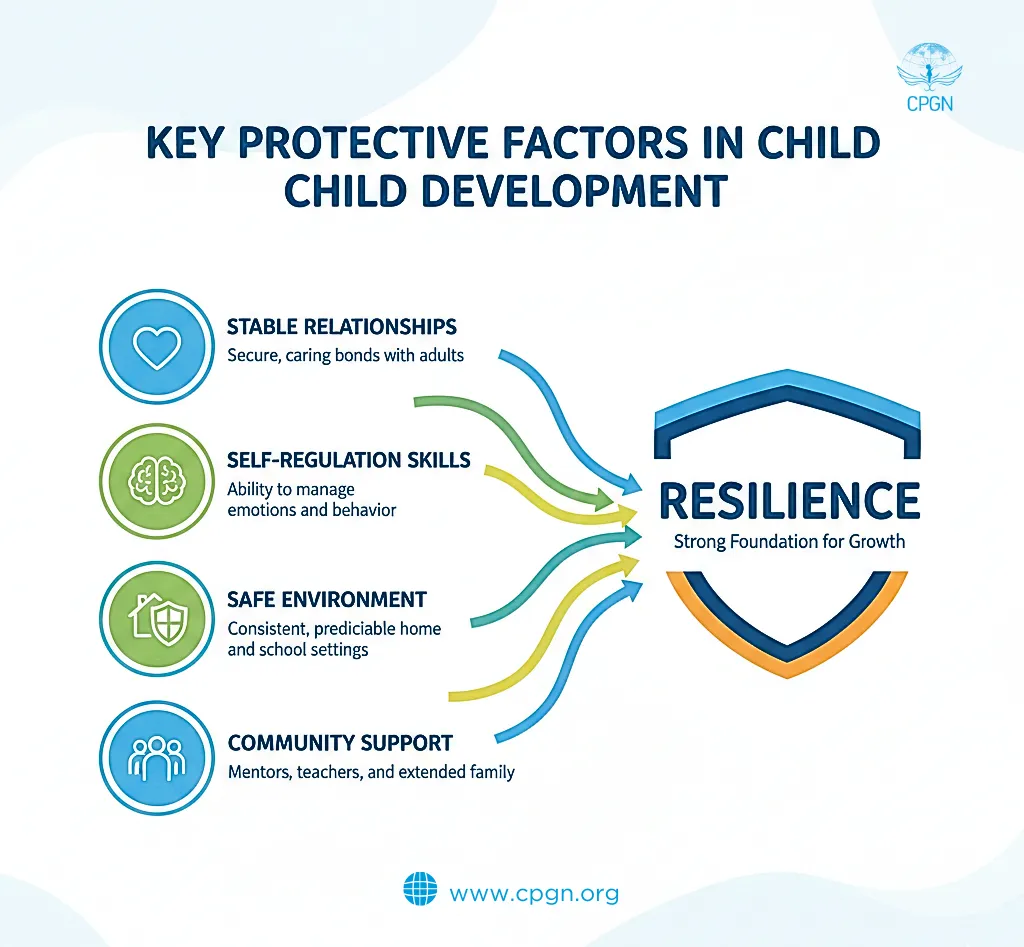
Resilience refers to the ability to bounce back from adversity, and protective factors are key to building this trait. By fostering positive relationships, providing safe environments, and ensuring children have access to supportive resources, we can help them develop resilience in the face of challenges.
Resilient children are better able to cope with stress, solve problems, and stay positive in difficult circumstances. The more protective factors a child has, the stronger their resilience and ability to manage life’s challenges.
U.S. Child Protection Frameworks and Rights
Child protection is a human right and a global responsibility. The U.S. government and organizations like UNICEF advocate for children’s rights and emphasize the importance of protective factors in child development.
The U.S. Department of Justice (DOJ) and the Office for Victims of Crime (OVC) actively promote protective frameworks designed to safeguard children from abuse and neglect, including programs focused on resilience and family support. (ojp.gov)
Fostering Protective Factors for Children’s Well-being
Protective factors are essential for child development. These factors help children face adversity, manage stress, and thrive in challenging environments. Whether it’s through supportive relationships, stable environments, mental health care, or educational opportunities, these factors provide the foundation for a child’s resilience and future success.
At CPGN, we are committed to strengthening these protective factors through education, advocacy, and community support. By partnering with us, you can help us build a stronger foundation for children everywhere. Together, we can ensure a future where every child has the support they need to grow, thrive, and succeed.
Partner with us at CPGN.ORG to help strengthen protective factors in every community.
About Child Protection Global Network (CPGN)

Child Protection Global Network (CPGN) is a U.S.-based nonprofit organization dedicated to protecting children and advocating for their well-being worldwide. Through our child protection initiatives, we work to create safe, nurturing environments for children, strengthen protective frameworks, and provide resources to families in need. Join us in building stronger communities by supporting our efforts. Donate Now or Get Help.
FAQs
The best protective factors include stable relationships, emotional regulation skills, access to health and education resources, and a safe, nurturing environment.
A strong community provides emotional and social support, offering children safe spaces, mentoring, and positive role models, which help them build resilience.
By providing emotional support, stable environments, and coping mechanisms, protective factors reduce stress and mitigate risks, preventing long-term mental health challenges.
Yes, protective factors, such as a supportive adult figure and strong coping skills, help children process trauma and recover, minimizing its long-term impact.

See a child in danger? If you are in immediate danger, call local emergency services. For guidance from CPGN, GET HELP.
CPGN is a 501(c)(3)—donations are tax-deductible where applicable. Our goal is to ensure the safety and protection of every child until it is achieved.
Quick Links

See a child in danger? If you are in immediate danger, call local emergency services. For guidance from CPGN, Get Help.
CPGN is a 501(c)(3) — donations are tax-deductible where applicable. Our goal is to ensure the safety and protection of every child until it is achieved.
Copyright © 2026 CPGN. All rights reserved by Majnate LLP | Privacy Policy | Terms and Conditions