E-Safety 2025: How Deepfakes and Live-Streaming Threaten Child Protection
Deepfake technology and live-streaming platforms pose significant risks to children in 2025. Learn about the dangers, data-backed findings, and how to protect your child online.
Imagine a world where your child’s image, voice, or actions can be manipulated so convincingly that they are made to appear in situations they never consented to. Deepfake technology and live-streaming platforms are changing the digital landscape, and with it comes a growing set of risks for children.
While these technologies have the potential to empower creativity and self-expression, they also open doors to dangers that can harm children in ways we’ve never had to deal with before. In 2025, as these tools become more advanced, children are increasingly vulnerable to exploitation, grooming, and abuse. But what can we do to protect them? How can we navigate this digital age and ensure our kids are safe?
In this blog post, we will explore the threats deepfake and live-streaming pose to children, focusing on the real-world impact, data-backed risks, and practical steps we can take to prevent harm. We’ll also discuss solutions and how laws are evolving to address these modern challenges.
Key Takeaways
- Deepfake technology allows perpetrators to create non-consensual explicit content of minors, leading to sexual exploitation, sextortion, and mental trauma.
- Live-streaming platforms are used by predators to groom, exploit, and blackmail children.
- 2025 laws are beginning to criminalize non-consensual deepfake content involving children, but more action is still needed.
- Practical steps for parents, schools, and platforms to reduce risks and protect children in the digital space.
The Growing Threat of Deepfakes and Live-Streaming in 2025
What Are Deepfakes and Why Are They So Dangerous?
Deepfakes are AI-generated videos, images, or audio that can convincingly alter someone’s likeness, making them appear in ways that never actually happened. This can be particularly dangerous for children, as deepfake technology can be used to create fake explicit content, including sexual abuse material that appears to involve minors. While the images may not be of real children, they still carry the same devastating risks including grooming, sextortion, and psychological harm.
Recent studies, such as those from the eSafety Commissioner, show that AI-generated child abuse material (CSAM) is becoming disturbingly realistic, making it harder for authorities to differentiate fake content from real.
Live-Streaming and Its Hidden Dangers
The rise of live-streaming platforms like Twitch, YouTube, and Instagram has created a new risk for children. Predators are increasingly using these platforms to groom and exploit minors. These platforms allow predators to manipulate children by gaining their trust over time, building relationships through direct messaging and private video chats, often with the intention of coercing them into sharing explicit content.
The challenge is compounded by the use of encryption and private messaging, which makes it more difficult to detect and block predators. Many children are unaware of the potential dangers they face online, making them easy targets.
Key Risks to Children in the Digital Age
Deepfake-Driven Child Sexual Exploitation (Synthetic CSAM)
AI tools are increasingly used to create synthetic child sexual abuse material—realistic but fake images or videos that depict children in explicit situations. These synthetic deepfakes can cause emotional trauma, psychological harm, and social stigma. Despite being fake, these images can be disseminated online, creating real consequences for the victims.
A report by ResearchGate highlights how deepfake abuse can cause long-term psychological damage, as children face the risk of re-victimization if the images continue to circulate.
Non-Consensual Nudification of Minors
Some AI-powered apps, marketed as “fun filters” or “photo editors,” are being misused to create explicit images of minors without their consent. This process, often called “nudification,” is becoming more widespread. Children, especially teens, may not realize the dangers these apps pose, and once an image is altered, it can be shared or used for blackmail, harassment, or even exploitation.
Financial Sextortion and Coercion
Deepfakes also make sextortion schemes even easier to execute. Predators can generate fake intimate images of children, then use them for blackmail, demanding money or additional explicit content in exchange for not sharing the images online. Research by Thorn shows that 10% of financial sextortion cases now involve AI-generated images, with many minors too afraid to report these incidents due to shame and fear of not being believed.
What the Data & Research Reveal
eSafety Commissioner (Australia) surveyed children aged 10-15 and found that harassment, image-based abuse, and exposure to harmful content were widespread.
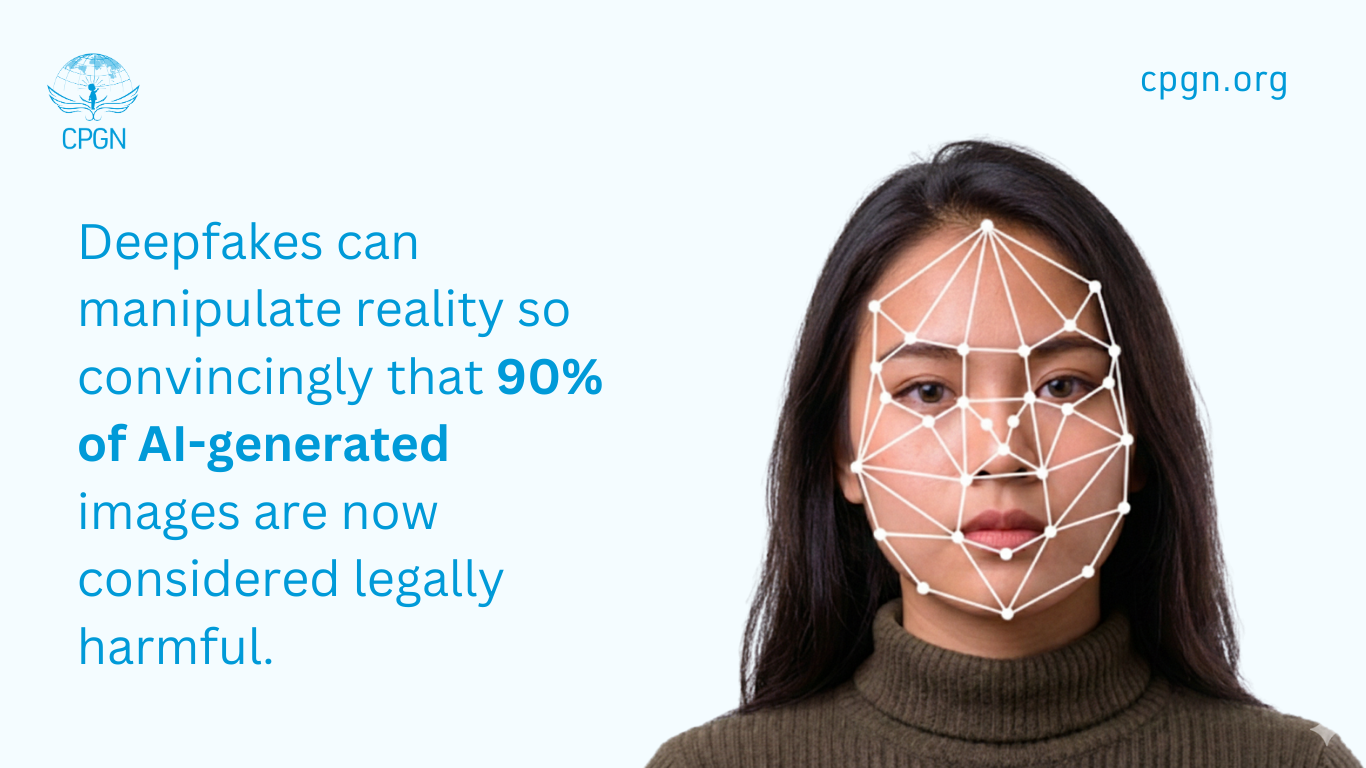
- European Parliament found that 90% of AI-generated images were realistic enough to be treated under CSAM laws.
- Thorn reports that about 10% of financial sextortion incidents now involve deepfake or synthetic images.
These findings highlight the urgent need for action to protect children from these evolving threats.
What’s Being Done, And What’s Still Missing
Positive Moves and Emerging Safeguards
New legislation is emerging globally, criminalizing the production and distribution of AI-generated child abuse images. Several jurisdictions are also tightening platform regulations, requiring companies to remove harmful content promptly.
Technological advancements in deepfake detection are underway, with platforms beginning to adopt tools capable of identifying AI-generated abuse.
What’s Still Missing
- Detection tools: Many current tools still rely on outdated methods, such as hashing, making it difficult to detect novel AI-generated media.
- Global enforcement: Laws protecting children vary widely by country, with some regions lacking any regulation around AI-generated abuse.
- Education: There is still a significant gap in media literacy, especially in low-tech or low-resource settings, leaving children vulnerable to these threats.
Practical Steps: What You Can Do to Protect Children
1. Educate Children Early
Talk to children about the dangers of deepfakes and consent. Ensure they understand the risks of sharing personal images and videos online and encourage them to report suspicious activity.
2. Enforce Stricter AI-Safety Laws
Governments need to pass laws that criminalize non-consensual deepfake content and force platforms to take stronger measures in removing harmful content.
3. Invest in Detection and Prevention Technology
Platforms must adopt advanced AI detection tools that can identify synthetic media and grooming behaviors even on encrypted channels.
4. Support Victims of Deepfake Abuse
Provide children with access to counseling, safe reporting channels, and legal support. Ensure that victims feel safe and believed when reporting abuse.
CPGN’s Role in Protecting Children from Digital Harm

At CPGN, we are committed to ensuring children’s safety in the digital age. We advocate for stronger protections against deepfake exploitation, sextortion, and online grooming. By working with governments, tech companies, and advocacy groups, we strive to create a world where children can enjoy the benefits of technology without the risks.
Join us today, get involved now and help create a safer online world for children.
FAQs
Deepfakes are AI-generated media (video, images, audio) that manipulate reality, often used to create explicit content involving children. These fake images can lead to sextortion, grooming, and psychological harm.
Live-streaming platforms allow predators to groom children over time, using direct messaging and video chats to exploit them. These platforms' privacy features make it harder to spot suspicious behavior, increasing the risk for children.
Parents should educate children about the risks of deepfakes, consent, and privacy. Encourage them to report anything suspicious and ensure they know the importance of safe online behavior.
Yes, in 2025, new laws are emerging that criminalize AI-generated abuse involving children. Governments are beginning to hold platforms accountable for removing harmful content more swiftly.
Advanced AI detection tools are being developed to identify deepfake content and spot grooming behaviors in real time, even on encrypted platforms. However, more research and investment are needed to make these systems effective globally.

Mark Schwartz
Mark Schwartz is a dedicated child protection advocate and co-founder of Child Protection Global Network (CPGN). With a strong background in community development and public education, he focuses on raising awareness about the realities of child abuse and neglect. Mark leads outreach efforts to inform families, educators, and communities about the importance of recognizing warning signs and reporting abuse. His work is driven by a deep belief that informed communities are the first line of defense in protecting children.
All Posts

See a child in danger? If you are in immediate danger, call local emergency services. For guidance from CPGN, Get Help.
CPGN is a 501(c)(3) — donations are tax-deductible where applicable. Our goal is to ensure the safety and protection of every child until it is achieved.
Quick Links

See a child in danger? If you are in immediate danger, call local emergency services. For guidance from CPGN, Get Help.
CPGN is a 501(c)(3) — donations are tax-deductible where applicable. Our goal is to ensure the safety and protection of every child until it is achieved.
Copyright © 2025 CPGN. All rights reserved by Majnate LLP | Privacy Policy | Terms and Conditions