
When Protection Becomes Control: Understanding Negative Parental Gatekeeping
Learn about negative parental gatekeeping, its impact on children, and how to address it for healthier co-parenting and emotional well-being.

- Mark S.
- Last updated 31 July 2026
Parenting is challenging, especially in high-conflict separations. But when one parent consistently limits the other’s involvement in the child’s life without valid reasons or concerns about the child’s safety, this becomes more than just conflict.
It becomes negative parental gatekeeping, a subtle yet harmful behavior that affects not only the relationship between parents but also the emotional well-being of the child.
Whether it involves withholding visitation rights, making unfounded accusations, or restricting contact without clear cause, negative gatekeeping can slowly erode the bond between a child and the parent who is being restricted. Although this behavior may masquerade as protection, it can cross into emotional child abuse, causing profound and lasting harm to a child’s sense of security, trust, and emotional well-being.
Quick Overview: What You’ll Learn in This Post
This post covers:
- What negative parental gatekeeping is and how it manifests in families.
- The psychological impact on children when one parent is restricted.
- How negative gatekeeping differs from protective gatekeeping and parental alienation.
- Signs to recognize and strategies to address this issue.
- Resources for parents facing these challenges.
What is Negative Parental Gatekeeping?
At its core, parental gatekeeping refers to the behaviors that one parent uses to either facilitate or restrict the involvement of the other parent in the child’s life. While facilitative gatekeeping encourages and supports the other parent’s involvement, negative gatekeeping is the restrictive version of this behavior, and it often comes from a place of control, resentment, or personal conflict, rather than genuine concern for the child’s well-being.
Pro Tip for Parents:
If you’re feeling frustrated by a co-parent who’s limiting your involvement, ask yourself: Is this behavior based on concern for the child’s safety, or is it rooted in personal conflict with the other parent?
Signs of Negative Gatekeeping: How to Recognize It
Here are common behaviors that signal negative gatekeeping:
- Unjustified visit cancellations: If a parent frequently cancels scheduled visitations or activities without providing clear, evidence-based reasons for the child’s safety, it’s a red flag.
- Publicly speaking negatively about the other parent: Constantly badmouthing the other parent in front of the child can create confusion and emotional stress.
- Withholding important information: When one parent withholds essential details (e.g., medical records, school updates, extracurricular activities) to limit the other parent’s involvement, it’s a form of gatekeeping.
- Setting impossible conditions: Imposing unnecessary conditions (e.g., needing to approve a new partner before visits) that aren’t based on child safety is often used as a way to control.
Studies show that restrictive gatekeeping is particularly harmful to children in high-conflict separations, leading to lower paternal involvement and an increased risk of emotional and behavioral problems. In fact, children who experience restricted access to one parent are at a higher risk for issues like aggression and emotional regulation difficulties as they grow.
The Psychological Impact on Children
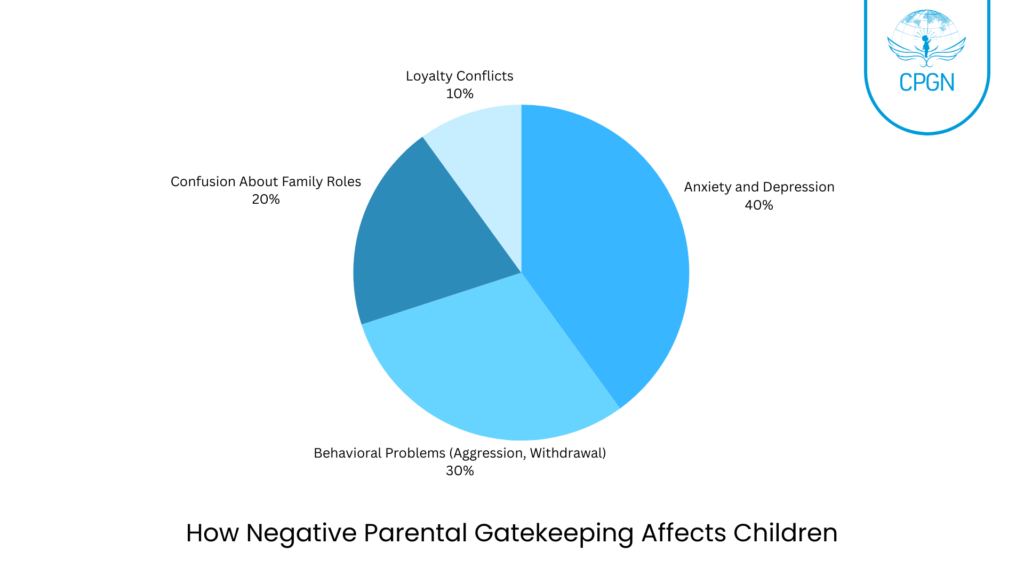
The emotional toll of negative gatekeeping is immense. Children are highly sensitive to the dynamics between their parents, and restricting their access to one parent can create confusion, anxiety, and emotional distress.
Here are a few common effects on children:
- Insecure attachments: A child who has limited contact with one parent may develop attachment issues, making it harder for them to form healthy relationships in the future.
- Behavioral problems: A lack of involvement from one parent, especially fathers, has been linked to an increase in aggression, poor emotional regulation, and even academic struggles.
- Confusion and guilt: Children may feel torn between their parents, experiencing loyalty conflicts and guilt about loving both parents. This confusion can lead to anxiety and stress.
Pro Tip for Parents:
If you notice your child showing signs of confusion about their relationship with the other parent (e.g., refusing to talk about them or expressing guilt about visiting), it might be an indication that negative gatekeeping is affecting them.
Children Should Never Feel Forced to Choose Sides
Help CPGN promote healthier family relationships that protect children from manipulation, parental conflict, and emotional harm.
Help Protect Children’s Well-Being ✓ CPGN is a U.S.-registered 501(c)(3) nonprofit.Protective Gatekeeping vs. Negative Gatekeeping
It’s important to understand that not all restrictions on a parent’s involvement are harmful or unjustified. Protective gatekeeping is appropriate when there is clear evidence of harm, such as substance abuse, physical abuse, or severe neglect. Protective gatekeeping is based on child safety, not personal conflict.
On the other hand, negative gatekeeping is driven by unresolved personal grievances or a desire to control, rather than protect the child.
Example:
- Protective gatekeeping: A parent restricts access because the other parent has a documented history of substance abuse.
- Negative gatekeeping: A parent limits access because they dislike the other parent’s new partner, without evidence of harm to the child.
A study by Lyngreenberg PhD highlighted that negative gatekeeping is linked to reduced paternal involvement and higher rates of emotional distress in children. On the other hand, protective gatekeeping ensures that children are not exposed to unsafe environments, prioritizing their well-being.
How to Recognize Negative Gatekeeping
Here are some helpful steps to identify and address negative gatekeeping in your family:
- Frequent cancellations: If visitations or contact are regularly canceled without safety concerns, take note.
- Unjustified criticisms: Watch for instances where the other parent is unfairly criticized in front of the child.
- Denial of essential information: Withholding updates on the child’s well-being, like medical or school information, is a red flag.
Tip for Professionals:
When assessing a case of suspected negative gatekeeping, gather information from multiple sources (e.g., school, healthcare providers) to understand the full scope of the situation and the emotional impact on the child.
What You Can Do to Address Negative Gatekeeping
If you find yourself in a situation where you’re either experiencing or witnessing negative gatekeeping, here’s what you can do:
- Seek professional help: Family therapy, mediation, or counseling can provide a neutral ground to address emotional conflicts.
- Consult legal professionals: In severe cases, legal action might be necessary to ensure that both parents have equal access and involvement in the child’s life.
- Improve co-parenting communication: Open, honest, and respectful communication is vital. Regular updates about the child’s needs, activities, and well-being can help reduce misunderstandings.
How CPGN Supports Families Facing Child Protection Challenges

At CPGN, we are committed to raising awareness about child protection issues, including negative gatekeeping. We provide resources, professional guidance, and support for families navigating difficult child custody and co-parenting dynamics. Through our global efforts, we aim to help parents create safe, supportive environments for their children.
Learn more about our mission and how we are creating a global shield for children by reading our post on CPGN’s impact.
Every Child Deserves Safe and Supportive Relationships
Your donation supports CPGN’s child-protection education, family resources, advocacy, and awareness efforts.
Support Safer Childhoods 🔒 Secure donations are tax-deductible where applicable.Promoting Healthy Co-Parenting for the Child’s Well-being
While negative parental gatekeeping can be subtle, its effects on the child’s emotional development are anything but. Understanding the difference between protective and negative gatekeeping, recognizing the signs, and taking the right steps toward resolving conflict are crucial for healthy co-parenting.
At CPGN, we encourage families to prioritize the well-being of the child, seek support when necessary, and work together to create a positive, supportive environment for children to thrive.
FAQs
Negative parental gatekeeping refers to behaviors by one parent that restrict or limit the other parent’s involvement with their child, often driven by personal conflict or emotional issues rather than actual safety concerns.
Children who witness negative gatekeeping can experience emotional distress, such as anxiety, confusion about family roles, and loyalty conflicts. This can lead to behavioral problems and difficulty forming healthy relationships later in life.
If you suspect negative gatekeeping, start by documenting behaviors that limit the other parent’s involvement. Consider seeking family mediation or counseling to address the issue. If necessary, consult a legal professional to understand your rights and options.
Mark S.
Mark S. is a dedicated child protection advocate and co-founder of Child Protection Global Network (CPGN). With a background in community development and public education, he supports CPGN’s mission to protect children from abuse and neglect through awareness, prevention education, and community guidance.
Through his work with CPGN, Mark helps families, educators, and communities better understand child safety, recognize warning signs, and take informed steps when a child may be at risk. His writing focuses on making child protection information clear, practical, and accessible for people who want to create safer environments for children.
Mark believes that protecting children begins with awareness, early action, and stronger community responsibility. His work reflects CPGN’s commitment to helping every child feel safe, heard, and protected.
All Posts

CPGN is a 501(c)(3) nonprofit organization dedicated to protecting children and strengthening families.
Tax-exempt since August 29, 2024.
CPGN is a 501(c)(3) nonprofit organization dedicated to protecting children and strengthening families.
Tax-exempt since August 29, 2024.
See a child in danger? If you are in immediate danger, call local emergency services. For guidance from CPGN, Get Help.
CPGN is a 501(c)(3) — donations are tax-deductible where applicable. Our goal is to ensure the safety and protection of every child until it is achieved.
Copyright © 2026 CPGN. All rights reserved by Majnate LLP | Privacy Policy | Terms and Conditions
One Response
In the Overview section of this article it says that it includes “How negative gatekeeping differs from protective gatekeeping and parental alienation.” I couldn’t find any content relevant to this difference in this article. I am guessing that either this article isn’t completely finished or it was an unintentional oversight. Regardless, I am interested to find out the difference.
I do appreciate the content overall and the work that you do!